© Master Builders KwaZulu-Natal 2017


Voice of the KZN building industry

Enquiry Form
Useful Links

GENERAL
SA REINFORCED CONCRETE ENGINEERS’ ASSOCIATION
SA REINFORCED CONCRETE ENGINEERS’ ASSOCIATION
SA REFRIGERATION AND AIR CONDITIONING CONTRACTORS ASSOCIATION
SA REFRIGERATION AND AIR CONDITIONING CONTRACTORS ASSOCIATION
SA INSTITUTE OF OCCUPATIONAL SAFETY AND HEALTH
MBSA
BUSA BUSINESS UNITY SOUTH AFRICA
FEM FEDERATED EMPLOYERS' MUTUAL ASSURANCE COMPANY LTD
NHBRC NATIONAL HOME BUILDERS REGISTRATION COUNCIL
SAACE SOUTH AFRICAN ASSOCIATION OF CONSULTING ENGINEERS
SAIA SOUTH AFRICAN INSTITUTE OF ARCHITECTS
SOUTH AFRICAN CONSTRUCTION INDUSTRY ORGANISATIONS LINKS C & CI CEMENT AND CONCRETE INSTITUTE
CETA CONSTRUCTION EDUCATION AND TRAINING AUTHORITY
CIDB CONSTRUCTION INDUSTRY DEVELOPMENT BOARD
JBCC JOINT BUILDING CONTRACTS COMMITTEE
SACPCMP SOUTH AFRICAN COUNCIL FOR PROJECT AND CONSTRUCTION MANAGEMENT PROFESSIONS
SAFCEC SOUTH AFRICAN FEDERATION OF CIVIL ENGINEERING CONTRACTORS
SAICE SOUTH AFRICAN INSTITUTION OF CIVIL ENGINEERING
SAISC SOUTH AFRICAN INSTITUTE OF STEEL CONSTRUCTION
SAQA SOUTH AFRICAN QUALIFICATIONS AUTHORITY
PUBLICATIONS
Lets Talk NHRBC
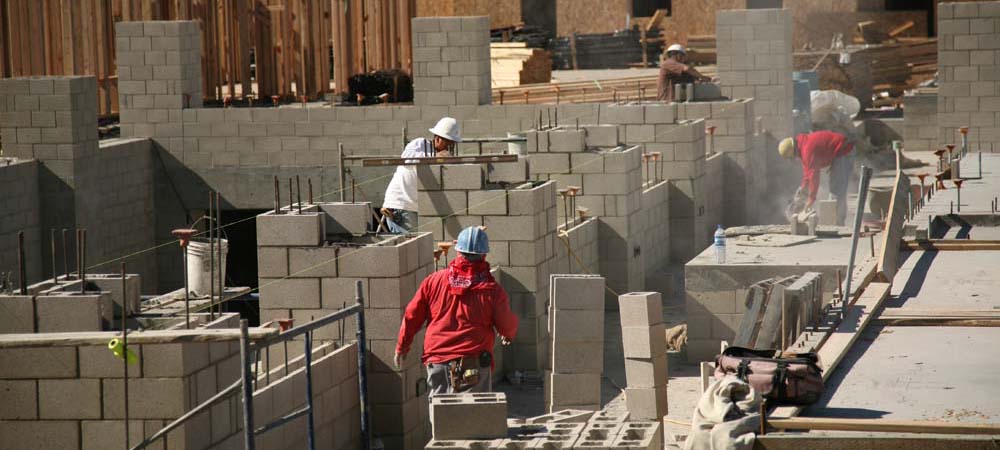
There are several factors that come into play with regards to registration as a Home Builder and the enrolment of new residential dwellings. Cognisance must be taken that enrolment is not restricted to Building Bonds only; all new dwellings must be enrolled. For more further information refer to the “Housing Consumer Protection Measures Act, 1998 (Act No. 95 1998) or visit the NHBRC website at www.nhbrc.org.za
Registration of Non-Subsidy Projects
All homebuilders, developers, engineers and other relevant stakeholders have to be registered with the NHBRC in order to enrol new residential dwellings. Please Note that the registration process requires an examination to be written and all criteria as per the registration form have to be met.
All new residential dwellings, whether plot and plan, sectional title, share block, flats, etc. are eligible for enrollment with the NHBRC under the Housing Consumer Protection Measures Act, 1998 (Act No. 95 1998). Failure to enroll can result in the following penalties:
- Fines of up to R 25 000, 00 per unit or a prison sentence of up to 1 Year.
- Lending institutions refusing to grant bonds.
Failure to enroll no later than fifteen (15) days prior to commencement of construction can result in a “Late Enrollment”. “Late Enrollments” have the following consequences:
- A Late enrollment fee.
- Travelling costs for inspection.
- Additional Competent person (Engineers) inputs.
- NHBRC can also due to the risk factor request a five (5) year financial guarantee (to be held by the NHBRC) for an amount up to 10% of the value of such property before issuing an enrolment certificate.
The following is a checklist of the documentation required for enrolment, as well as the structure of enrolment fees.
Registration of Subsidy Projects
In brief all Subsidy Projects are required to be registered and enrolled with NHBRC together with the Department of Housing and other stakeholders.
All Municipalities are required to be register with the NHBRC.
All Municipalities are required to register and enrol their Subsidy Projects with the NHBRC.Soon to be published on masterbuilders.co.za, more details on the entire Subsidy Procedure.
For More information the Provincial Subsidy Administrator can be contacted at all NHBRC offices.
Checklist for Enrollment of Non-Subsidy Homes
1. Normal enrollment: Plot and Plan
15 day before construction
EFOO3- Soil classification on B3
B1-
Single storey – RD1, RD2, RD5 (F3 IF REQUIRED)
Double storey – RD1, RD3, RD5 (F3 IF REQUIRED)
PAOO3 (financial institute involved)
Or proof of payment
Documents to be attached:
Title deed or agreement of sale (for land)
Contract between builder and owner of the house
Approved Plans (Floor & Site)
2. Cluster development/ Spec building / cash build
EF003 – Soil classification on B3
B1-
Single storey –RD1, RD2, RD5 (F3 IF REQUIRED)
Double storey – RD1, RD3, RD5 (F3 IF REQUIRED)
PAOO3 (financial institute involved)
Or proof of payment
Documents to be attached:
Title deed or agreement of sale (for land)
Contract between builder and owner of the house
Approved Plans (Floor and Site)
3. Sectional title
ST003- Soil classification on B3
B1-
Single storey –RD1, RD2, RD5, RD9 (F3 IF REQUIRED)
Double storey – RD1, RD3, RD5, RD9 (F3 IF REQUIRED)
Documents to be attached:
Deed of sale of units sold – or estimated selling price per market value per unit
Deed of transfer/ sale for land
Copy of floor and Site plans
Please be advised that with regard to all multi-storey apartments (i.e. more than 4 storeys) and soil classification P the submission must include:
- All design calculations (structural, civil & Foundation designs)
- Geo-Tech report
- Structural report
- Architectural Drawing
4. Late Enrollment: Plot & Plan/ Cluster development/ Spec building / cash build
EFOO3- Soil classification on B3
B1 - D1
Late enrolment questioner
Single storey –RD1, RD2, RD5 (F3 IF REQUIRED)
Double storey – RD1, RD3, RD5 (F3 IF REQUIRED)
Proof of payment
Documents to be attached:
Title deed or agreement of sale (for land)
Contract between builder and owner of the house
Approved Plans
Late Enrollment: Sectional title
ST 003
D1- for each unit
Late enrolment questioner - for each unit
Documents to be attached
Deed of sale of units sold – or estimated selling price per market value per unit
Deed of transfer/ sale for land
Copy of floor and Site plans
Late Enrollment
Late enrollment occurs when a registered home builder has not complied with the rules of the NHBRC to enroll the house fifteen days prior to he commencement of construction. Late enrollment of a house imposes considerable risk for the NHBRC in that a late inspection of such a unit may not identify underlying structural defects.
The following documents are required for late enrollment:
- Completed NHBRC Pro-Forma Documents – EF003 (Enrollment form) + Appendix B1 + Appendix D1
- Payment of enrollment fee + Late enrollment inspection fee (up-front payment) – bank guaranteed cheque
- Confirmation of selling price (price structure) – sale agreement or deed of sale for land with building contract
- Copy of the plans
- Street address, area map and contact person on site
Late enrollment fees, applicable in addition to the enrollment fees are:
R150.00 per unit for late enrollment, R250.00 per hour inspection fee to assess compliance with NHBRC technical requirements, R1.73 per km travelled for travelling costs.
The Council (NHBRC) may request any surety, guarantee, indemnity or other security considered reasonably by the Council to satisfy its obligations under section 16 (1) of the Housing Consumer Protection Measures Act No. 95 of 1998 before issuing the enrolment certificate.
Stakeholer Relations

Business, like all human endeavors, takes place within a complex matrix of relationships. The wellbeing of those relationships will have a direct impact on how constructive and effective the business can be. Some of these relationships are of critical importance, while others seem to only have a minor effect, on business dealings.
Building and construction related industries are no different. Relations with clients are literally the "make or break", not only to ensure the successful completion of the contract at hand, but also to enhance the said contractors reputation in the market place.
Other relationships do also come into play though. The contractor has to interact constructively with:
- other contractors (be they main contractors, sub-contractors or co-contractors);
- built environment professionals (architects, quantity surveyors and engineers)
- employees and their representatives
- government and various statutory and regulatory bodies (local council, NHBRC, CIDB; Department of Labour etc)
- users of the environment in which they are working
WHY WE DO IT?
It is frustrating and sometimes exceedingly difficult for stand alone companies to challenge unfair treatment. Contractors resolute on their rights being upheld, run the risk of being unfairly discriminated against by clients and agents alike. By Master Builders Kwa-Zulu Natal representing and acting in the best interests of members, members are able to remain anonymous and are thus shielded from retaliation.
Some of the challenges faced by members are not specific to a particular relationship, rather, they are general issues that arise out of certain regulations or industry practices. In such cases, it is far more effective for a representative body such as the Association to challenge the status quo on behalf of all its members, than to have individual contractors battling to make progress.
HOW WE DO IT?
Master Builders KwaZulu-Natal is, as one of its objectives, committed to establishing and maintaining relationships with various stakeholders in the building and construction industry. To this end, we have established a Stakeholders Forum.
The first purpose of the forum is to allow the opportunity for various stakeholders to identify common challenges and where possible formulate a common response to them.
Where lobbying of other parties is required to overcome these challenges, there is strength in the numbers and broad representation.
The second purpose of the forum is to create a platform for which issues between members of the stakeholders represented can be resolved. This allows for the resolution of conflict between contractors and subcontractors, or professionals and contractors, at an organised industry level without individual members or enterprises having to tackle these challenges on their own.
SAIA, The South African Institute of Architects
ITC, Institute for Timber Construction
SAFCEC, South African Federation of Civil Engineering Contractors
CONCRETE SOCIETY, Concrete Society of South Africa
SAPCA, South African Pest Control Association
ECASA, Electrical Contractors'Association of South Africa
IOPSA, Institute of Plumbing South Africa
AAQS, The Association of South African Quantity Surveyors
WATERPROOFING, Waterproofing Federation of South Africa
Social Media


