



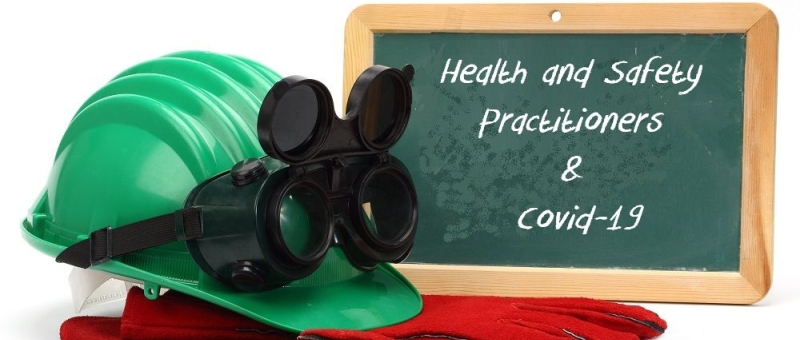
This unprecedented pandemic has changed the way we live our daily lives and how we respond to this pandemic will change the face of occupational health & safety at the workplace going forward.
Health and Safety Professionals are contracted to advise CEOs, board members, managers and employees on measures in curbing the spread of the coronavirus. Furthermore, not all professionals are registered with a platform to assist and support them during times when the information available is overwhelming and finding the truth seems nearly impossible.
Since the lockdown, many people have been up in arms about measures that need to be taken, which led to a multitude of webinars regarding the fight against COVID-19. Information includes what personal protective equipment (PPE) to use, how to conduct an effective risk assessment, what control measures to consider and what resources are available to OHS practitioners and employers.
The role of OHS practitioners in the mitigation of COVID-19 includes but is not limited to:
- Assess risks – infectious and non-infectious hazards.
- Identify high risk occupational groups, provide risk communication, advise on preventative measures, health surveillance.
- Provide alternative work arrangements, such as working remotely.
- Participate in business continuity plans.
- Assess risk, identify, record, and follow up occupational exposure.
- Provide risk communication and engagement of workers, psycho-social support.
- Collaborate with community/public health authorities.
In daily news across the globe, we are told to take care of ourselves, our families, our colleagues, and our clients. Businesses should take precautions to protect their employees and their clients, while employees should protect themselves, their colleagues, and their employer’s clients.
This, however, is not a new concept and has been formalised in sections 8 and 14 of the Occupational Health & Safety Act, Act 85 of 1993 (OHS Act), which clearly outlines the responsibilities of employers and employees.
The COVID-19 pandemic presents South Africa with new challenges, requiring policies, procedures and possibly legislation to be reviewed and revised to safeguard our businesses in the future, for example:
- Remote working, including at the employee’s house and accommodation when travelling.
- Is the employee’s personal workplace or designated work area free from harm?
- How do you manage IODs at the employee’s personal workplace?
- How do you stay in touch and encourage productivity?
- Is the employee mentally capable of working at home, and how will it affect their wellbeing?
- Simplifying the continuation of essential services.
- Going 100% digital in managing your Health and Safety Management System.
- Cyber security for when employees work at home.
It is important to note that once lockdown restrictions have been lifted, OHS procedures should not fall on the back burner and should be reviewed to ensure that they are integrated into your daily operations to avoid future hiccups when operations are influenced by a disaster.
The Association’s Health and Safety Department is available to assist and support our members OHS needs during these testing times.
Neil Enslin | Occupational Health and Safety Manager


